Punch List Template for Construction Projects
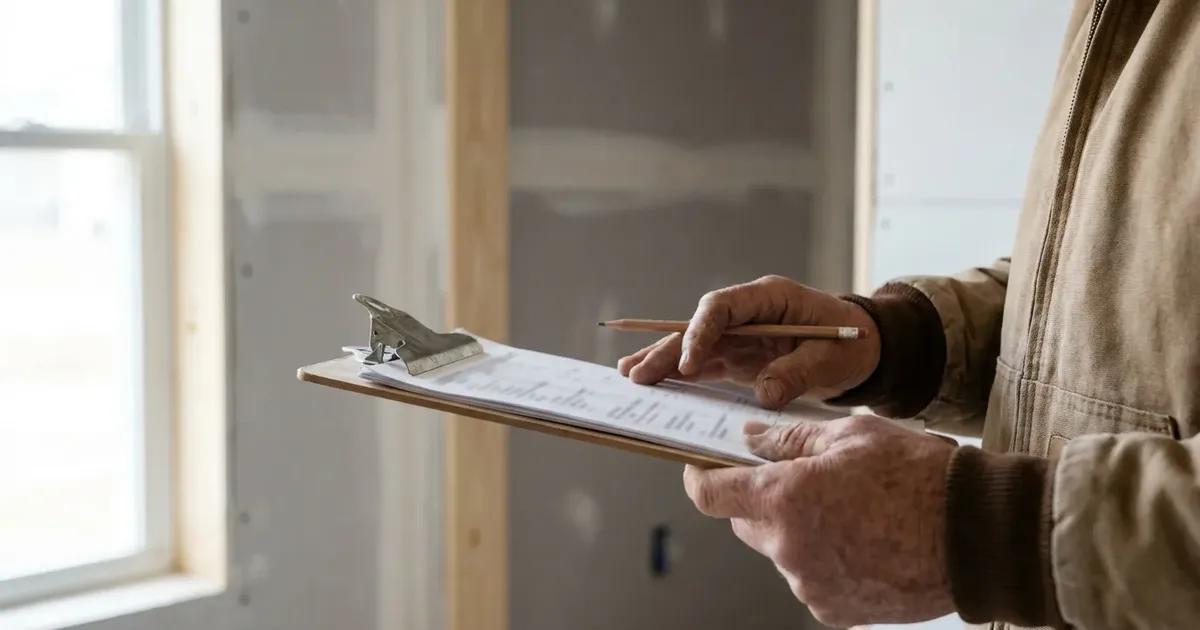
A punch list is the record of what still has to be finished or corrected before a project is accepted. It is written at substantial completion, walked with the client, and closed item by item. The punch list template below is the whole of it: five columns, one row per item, and a short set of rules about how the rows get filled in.

Ressio Staff
October 10, 2026
The punch list template
| # | Location | Item | Responsible | Status |
|---|---|---|---|---|
| 1 | Kitchen, north wall | Touch up paint at outlet cover | Painter | Open |
| 2 | Primary bath | Reseal tub surround, gap at left return | Tile | Open |
| 3 | Exterior, rear elevation | Replace cracked soffit panel | Framer | Open |
| 4 | Garage | Door does not latch without lifting | Framer | Verified |
Five columns and no more. Every extra column on a punch list is one more thing to fill in while standing in a half-finished room, and the ones people add first are the ones that go blank first.
Location has to be specific enough that someone who was not on the walk can find it. "Kitchen" is not a location; "kitchen, north wall, left of the range" is.
Item describes the defect, not the remedy. "Gap at tub surround" survives a change of plan; "add caulk" does not, and it quietly makes the subcontractor's decision for them.
Responsible names a trade or a person, never the company. "Someone" is how items age.
Status is Open, Fixed or Verified, and nothing else. Fixed is the trade's claim. Verified is yours.
Collapsing those two into "Done" is the single most common reason a closeout stalls: nobody can tell which items still need a second look.
What to do before the walk
Send the client the blank list and the date. A punch walk where the homeowner is seeing the format for the first time turns into a conversation about the format.
Photograph anything ambiguous as you write the row. A photograph attached to item 12 costs thirty seconds on the walk and saves the phone call three weeks later where two people remember the same gap differently.
Set the standard out loud at the start: a punch list captures work that is incomplete or defective against the contract, not work the client has decided they would now prefer differently. Change orders and punch items look identical on a wall and are not the same thing, and the walk is the cheapest place to say so.
What to do after it
Date every status change. A punch list without dates cannot answer the only question anyone asks later, which is whether an item sat with the trade or with you.
Re-walk only the Fixed rows. Verifying the whole list again is how a two-hour closeout becomes a day.
Close the list explicitly. Send the final version with every row Verified and the date. An unclosed punch list stays open in the client's mind long after it is empty, and it is the last document they see before they decide whether to recommend you.
On jobs that use AIA contracts, the G704 Certificate of Substantial Completion sets the time allowed to finish the punch list. Signing it also starts the warranty period and the release of retainage.
A printed punch list works until items start moving between trades. In Ressio, the construction management software we build for custom homes, our to-do lists let you create punch items on the project during the walkthrough, from your phone, and assign each one to the subcontractor responsible, who is notified when it is assigned.
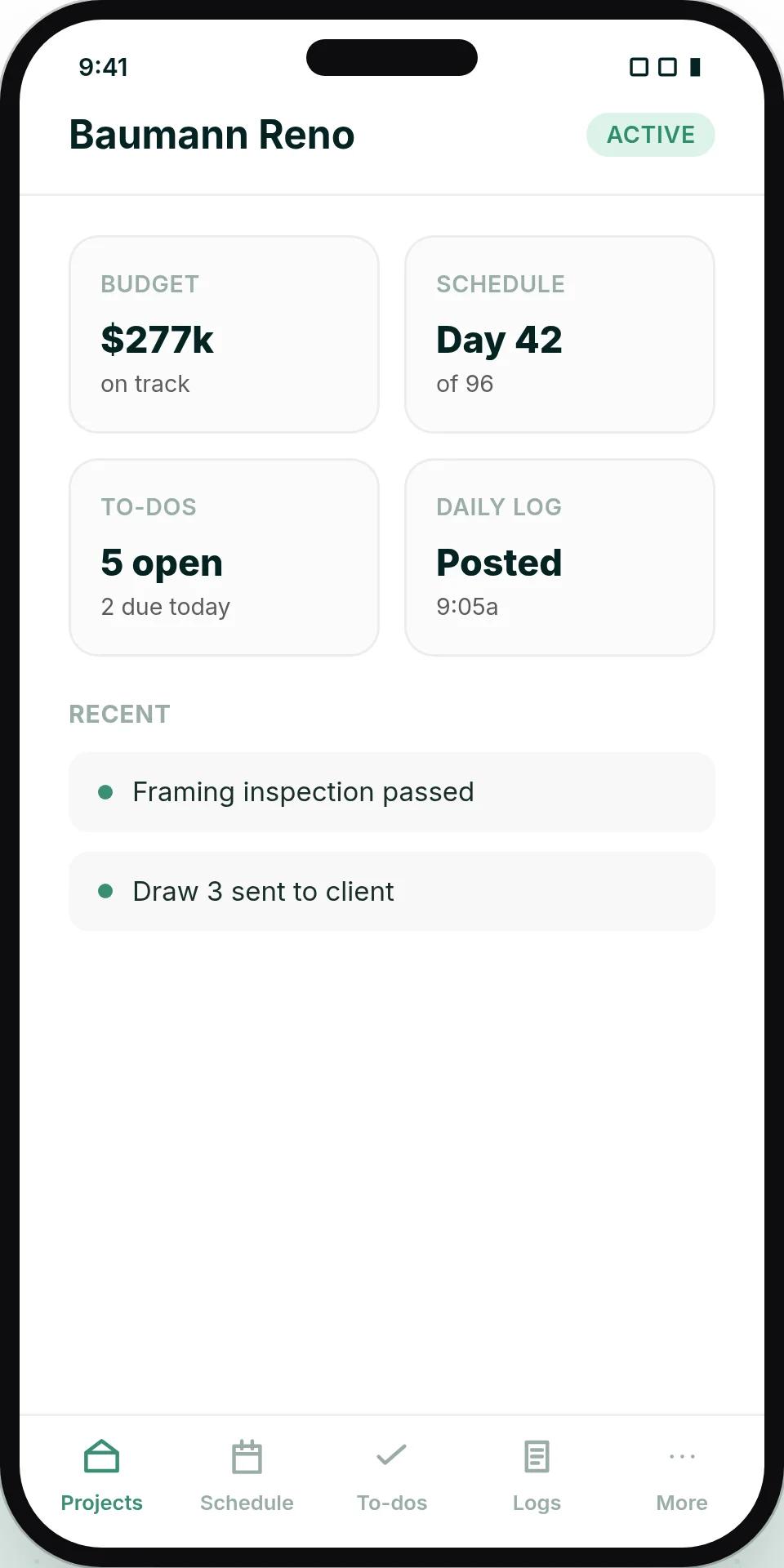
Every completed item is timestamped and stored on the project alongside your daily logs and documents, so the list keeps a dated record of who closed what. When the job is done, the closed punch list can be exported for the project record.
Take a hypothetical final walkthrough with the homeowner. The builder adds items room by room as the homeowner points them out, the painter and the tile setter each get their own, and before the re-walk the builder filters the project list by assignee to see what is still open.
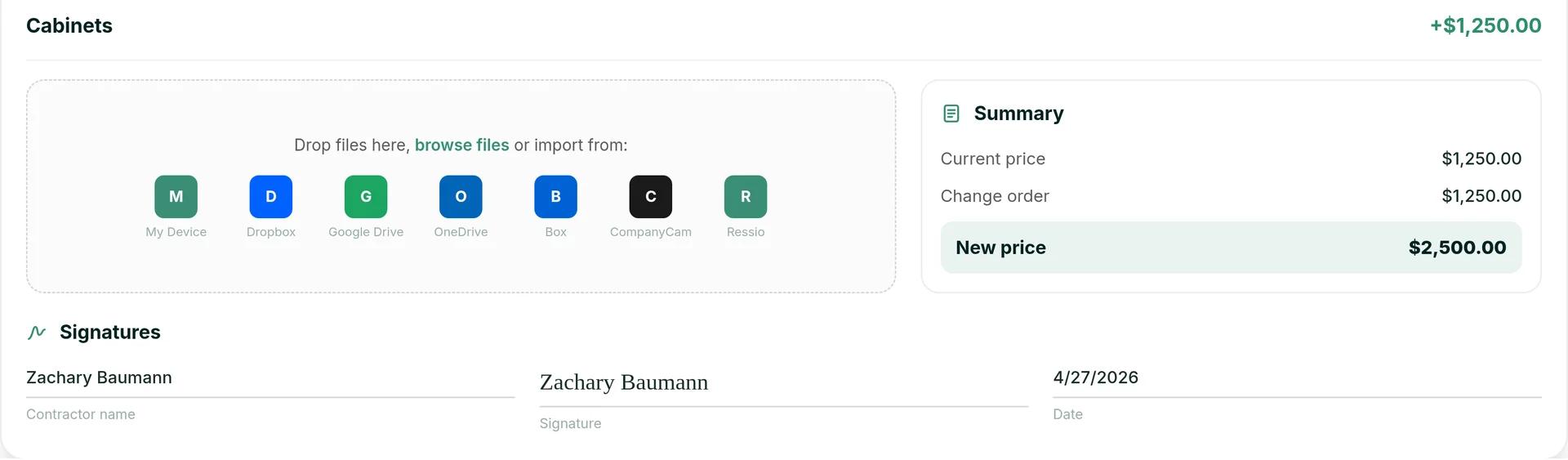
Anything the homeowner now wants done differently, rather than finished, becomes a change order the client approves from any device. To see a closeout run through Ressio on one of your own jobs, book a Ressio demo.
Frequently Asked Questions
What is a punch list in construction?
The list of items that remain incomplete or defective at substantial completion, recorded so they can be finished and formally accepted. It is created at a walkthrough near the end of a project and closed when every item is verified.
Who creates the punch list?
Usually the builder or general contractor, walking with the client and sometimes the architect. The builder writes the rows; the client confirms the list captures what they have seen.
What is the difference between a punch list item and a change order?
A punch item is work that was already in the contract and is incomplete or defective. A change order is work outside the contract. They look alike on a wall and are settled very differently, so the distinction is worth making out loud during the walk.
How long should a punch list take to close?
Most residential projects close within two to four weeks. What extends it is rarely the work: it is items with no named trade, or a Fixed status nobody verified.