IBS 2026: Reflections on Community, Velocity, and What’s Next

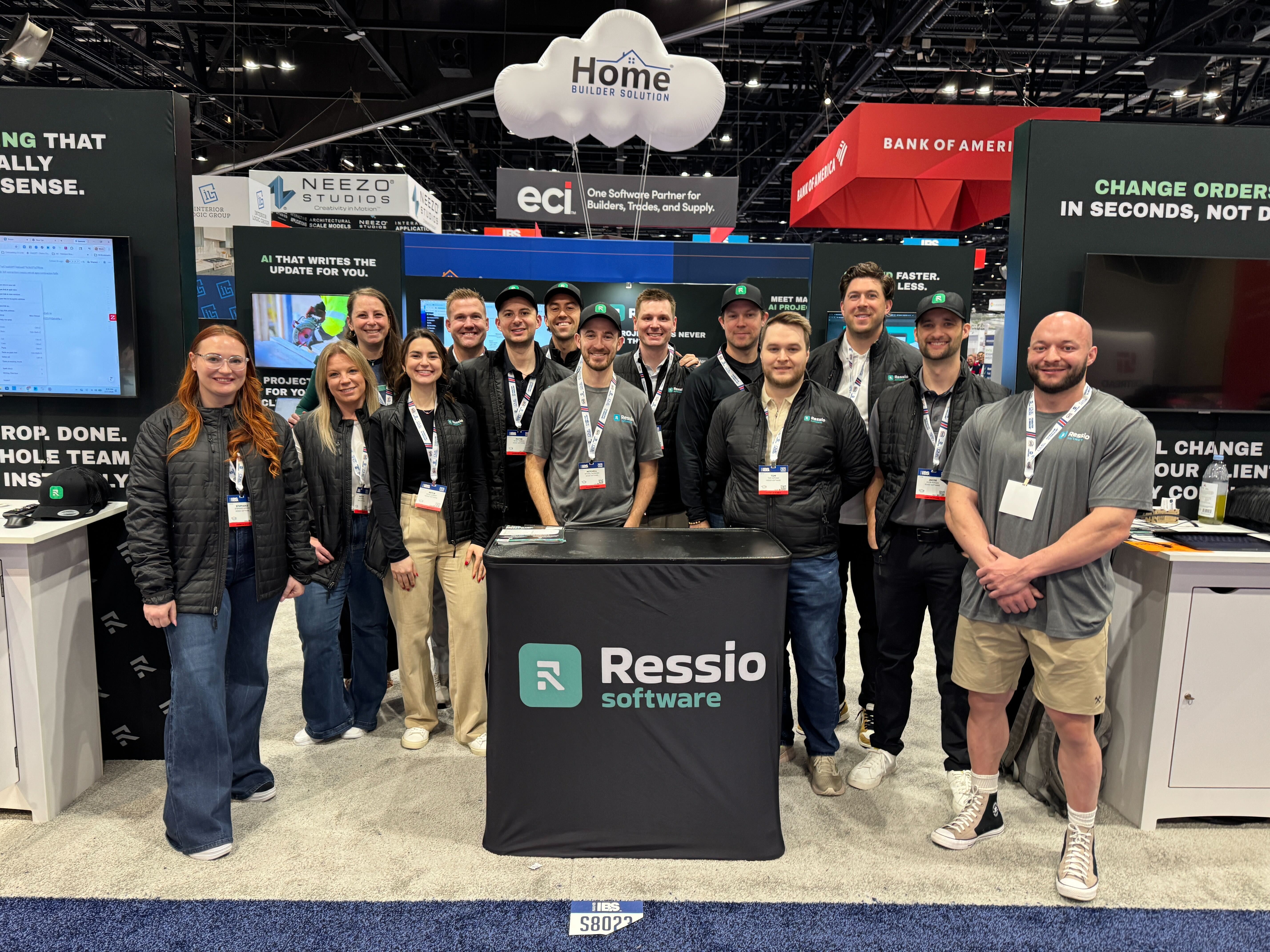
IBS is always one of the most important weeks of the year for us.
It’s one of the only times where we get to see so many of our customers in one place. It’s also where we put our product on the floor alongside every other project management platform in the space. It’s energizing, but it’s also clarifying.
This year, there were 5 themes that really stood out to me.
1. Community Was the Biggest Highlight
If I start anywhere, it’s with our customers.
Our happy hour on Tuesday night was almost at capacity. We were one person short of having to turn people away. That alone was exciting, but what mattered more was what I saw inside the room.
Builders who have been with us for years were talking to newer customers. They were sharing what’s working in their businesses. They were comparing notes on processes. Some builders weren’t even shopping software—they just wanted to come by, say hello, and be part of it.
Multiple people told me they love the culture we’re building. That they enjoy being part of something that feels collaborative instead of transactional.
At the booth, it felt similar. We intentionally funneled customers to our customer success coaches so they could sit down and talk through their experience—what’s working, what’s not, and what they want next. Many of the conversations turned into working sessions.
It felt like our booth was a place people wanted to spend time, not just pass through.
Going forward, we want more of that. More builder roundtables. More in-person events (keep an eye out for details on RessioCon 2026). More opportunities for builders to learn from each other, not just from us.
Software matters. But seeing customers build relationships with each other reminded me that what we’re building extends beyond features.
2. Conferences Reward Clarity and Momentum
IBS also reinforced something important on the sales side.
Selling at a conference is not the same as selling the other 362 days of the year.
In a normal sales cycle, you have time. You can go deep. You can walk through workflows and show how the system fits into someone’s business.
On the show floor, you have minutes.
There’s noise. There’s energy. There’s celebration everywhere. You have to communicate clearly and create belief quickly.
It reminded me that conferences reward clarity and momentum. That’s something we’ll continue to improve as we think about how we show up at future events.
3. Product Velocity Will Separate the Market
Beyond the community and sales conversations, the biggest strategic theme for me was product velocity.
Everyone in this space is building. Everyone is adding features. Improvement is the baseline now.
The companies that separate themselves over the next twelve months will be the ones that move the fastest.
Today, the playing field feels relatively level. A year from now, it may not be. The one that builds faster and compounds improvements consistently could change the trajectory of the market.
We’re in a strong position because of our modern code base. It allows us to ship updates quickly and iterate frequently. In many cases, we’re releasing improvements every two weeks, and customers notice.
I heard several variations of the same comment throughout the week: “You guys are always releasing something.”
That’s encouraging.
What’s changed internally is how we build. We’re leveraging AI and agents in our own development process. Non-technical team members are contributing to the product in ways that weren’t possible even a year ago.
A simple example: the other night, after getting back from IBS, I shipped a few small feature improvements myself. In the past, those would have required writing up a ticket, prioritizing it in a sprint, waiting on engineering capacity, and coordinating across the team. Instead, I was able to work through it directly, test it, and push it live.
But speed alone isn’t enough.
IBS also reminded me that polish matters. The core experience resonates strongly with builders. Where we need to continue improving is in the small details — the friction points, the moments that feel slightly inconsistent, the workflows that could be tighter.
What’s encouraging is that AI doesn’t just help us build new features faster. It also helps us refine the product faster.
Given where these tools are today, we’re in a position to clean up the little things more quickly than we could in the past. It enables us to tighten workflows, UX consistency, and eliminate friction before it compounds.
That’s part of real velocity.
4. AI Only Matters If It Fits Into a Role
When it comes to AI, estimating generated the most buzz.
When an estimator can generate a strong starting point in seconds instead of rebuilding similar scopes of work from scratch, that’s meaningful because it saves real time.
It’s also important to note that the best use cases of AI are when it’s paired with a role.
Superintendents saw how workflows could automatically update schedules and to-do lists instead of doing it manually at night. Bookkeepers saw how receipt capture and bill entry could eliminate repetitive data entry. Estimators saw how they could generate initial output and refine it instead of starting from a blank screen.
What that really comes down to is leverage.
Most builders I talked to don’t want to double their headcount just to grow revenue. They want to stay lean and go from $5M to $15M without adding layers of overhead.
AI, when applied correctly, allows that. It removes the mundane work so the team can focus on higher-value decisions.
We’re investing heavily here because this is where the industry is heading. At the same time, it’s still early. AI hasn’t fully materialized into high-impact workflows across construction yet.
The next phase will be about who integrates AI into real day-to-day workflows in a way that compounds over time.
5. Focus Will Matter as Much as Speed
If there’s one question IBS reinforced for me, it’s this:
What do we build, and for whom?
There is no shortage of ideas. There are feature requests from every direction. There are opportunities across multiple segments of the market.
It would be easy to try to build everything.
But that’s how products lose focus.
We have to be disciplined. We have to choose the builders we want to serve deeply and build in a way that compounds for them year after year.
The opportunity in this market is still massive. There are thousands of builders who are either under-served or not using modern systems at all.
But opportunity without focus creates noise.
IBS 2026 was energizing for a lot of reasons…
We have customers who feel connected.
A product that’s moving quickly.
And a market that is still early.
The next twelve months are going to be big for our industry and I’m excited about where we’re positioned if we stay focused and keep building.
Discover the Future of Building with Ressio
See why modern builders are ditching legacy platforms for Ressio. Book a demo and discover AI-powered automation that actually saves time and protects margins.
Learn More